Wave Soldering vs Selective Soldering: The Decision Framework for High-Mix EMS Factories
Diagnosis
The standard advice is ‘wave for volume, selective for high-mix’. That sentence has cost factories real money, because it substitutes a rule of thumb for a calculation. Here is what actually happens on a high-mix floor. Each new part number needs a selective pallet: design, machining, commissioning, and storage. Pallets wear, warp and accumulate flux. Changeover means finding the right pallet, fitting it, and re-profiling. Meanwhile the boards that could run pallet-free sit in a queue behind the ones that cannot. You are not comparing two machines. You are comparing two cost curves, and the curves cross at a point you have never calculated.
Variable 1 — Boards per part number per month
This is the dominant variable. Below roughly 2,000 boards per part number per month, selective soldering usually wins, because the pallet never amortises. Above roughly 8,000, wave wins on pure cycle time. Between those numbers, the other three variables decide.
Variable 2 — Pallet cost and count in your active mix
Add up your active part numbers that require a pallet, multiply by your landed pallet cost including design and commissioning, and divide by expected pallet life in months. This monthly pallet burn belongs in your comparison. Factories are frequently surprised to find it exceeds the monthly lease cost of a selective soldering cell.
Variable 3 — Changeover minutes and how often you pay them
Wave changeover including pallet handling, fluxer setup and profile verification runs 20 to 45 minutes. Selective soldering programmed from CAD data runs under 5 minutes and often under 1. Multiply the difference by your changeovers per week and your loaded hourly cost. On a line changing over six times a day, this single variable can exceed everything else combined.
Variable 4 — Thermal constraints on the solder side
If the solder side already carries heat-sensitive SMD parts, tall connectors or components that cannot survive a full wave pass, selective is not an option — it is a requirement. No amount of volume justifies desoldering downstream parts you already placed. This variable overrides the other three every time.
The decision rule
If Variable 4 says selective, stop calculating and buy selective. Otherwise, run the model: monthly pallet burn plus monthly changeover cost, compared against the monthly cost of a selective cell including capital amortisation. Pick the lower number, and re-run it every time your product mix shifts materially.
Our vehicle
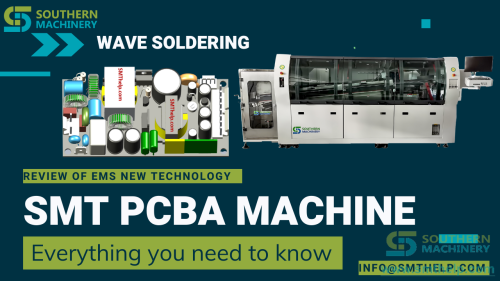
Both sides of this model are equipment we build and support. The S-WS450 is a PC-controlled lead-free dual-wave machine with nitrogen option, tuned for the volume end of the curve — most customers hit payback inside 12 months on labour and dross savings alone. The S100B desktop selective soldering robot is the other end: fixture-free, programmed from the board file, changeover under five minutes. If you send us your board mix, we will run the four-variable model with your actual numbers and tell you which way it falls, even when the answer is the smaller machine.
The compounding loop
Product mix is not static, so this decision should be revisited rather than made once. The practical habit: keep a running log of changeover minutes and pallet spend per part number, and re-run the crossover model every two quarters. Factories that do this routinely discover a subset of boards that should move from wave to selective (or back) — a switch that pays for itself in a quarter and requires no new capital if you own both capabilities.
Send us three board drawings from your current mix plus your monthly volumes. We will run the crossover model and send back the calculation, including the pallet burn figure you are probably not tracking today.
Can one machine do both wave and selective soldering?
Not in a single process chamber. Wave soldering immerses the whole board underside; selective soldering addresses individual joints. Some factories run both machines and route boards by part number, which is the configuration we recommend once the mix justifies it.
Does selective soldering meet automotive reliability requirements?
Yes. Selective soldering with nitrogen and correct preheat produces joints that meet IPC-A-610 Class 2 and Class 3 when programmed correctly. The critical controls are flux volume, preheat temperature at the joint, dwell time and solder pot temperature — all of which are logged per joint on modern equipment.
How do we control dross on a lead-free wave machine?
Three levers: nitrogen inerting of the pot area, a laminar main wave that reduces turbulent oxidation, and a correctly profiled preheat so boards arrive at the wave with flux fully activated. We supply the recommended profile and tune it during commissioning.
What does a selective soldering pallet actually cost?
Landed cost including design, machining and commissioning varies widely by region and complexity, but the important number is not the unit price — it is monthly pallet burn across your active part numbers. That is the figure that belongs in the comparison, and it is the one most factories never calculate.